Tai chi, sometimes written as t’ai chi, is a self-defense and calisthenics technique developed in China centuries ago as a maturation of several similar but separate exercises. The more formal name of this technique is Tai Chi Chuan, which translates loosely to “supreme ultimate boxing.”
While often referred to as a form of gentle exercise, Tai Chi is not just a physical activity, according to Peter Wayne, an assistant professor of medicine at Harvard Medical School and the research director at Harvard’s Osher Center for Integrative Medicine.
“[Tai chi] is a mind-body exercise that integrates slow, gentle movements, breathing and a variety of cognitive components, including focused attention, imagery and multi-tasking,” Wayne told Live Science.
Doctors and researchers both in China and in the Western world have documented many health benefits from tai chi, including improvements in balance, flexibility, stamina, blood pressure, general heart health, mental health and symptoms associated with stroke, fibromyalgia, Parkinson’s disease and Alzheimer’s disease.
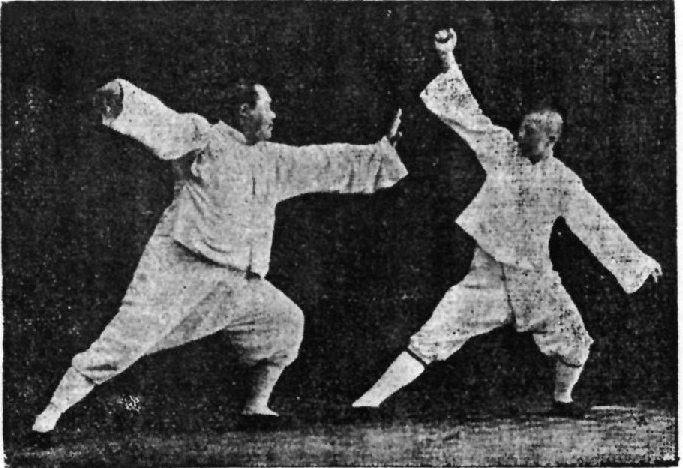
The most widely held believe is that Tai Chi Chuan was devised by Chang San-feng, a renowned Taoist teacher who is thought to have lived during the 13th Century, spending part of his life in the remote Wudang Mountains. Today Wudang mountain is a pilgrimage destination for Taoists and tourists and there remain statues of Chang San-feng in temples on the mountain.
In more recent times it has it has been suggested that the art was actually developed by the Chen family.
Although we can never know the source of Tai Chi Chuan there are some well documented facts about the history to the modern art.
The most famous practitioner of Tai Chi Chuan was Yang Lu-chan (1799-1872) who learnt his art from Chen Chang-xing (1771- 1853) while living in the Chen family village.
Yang Lu-chan took his art to Beijing where his fighting ability was in great demand and resulted in him being appointed combat instructor to the Royal Court.
Over the years Yang Lu-chan taught many students and from those students new styles developed, the five main styles are Chen, Yang, Wu, Sun and Li with variations including the widely practiced Wudang, Cheng Man-Ching and less well known Hao styles.
As society became more settled and the state took on a greater responsibility for personal security and military power the need for martial arts among the population diminished. Tai Chi evolved to the new situation with the emphasis moving to the physical, mental and health benefits of practicing the forms.
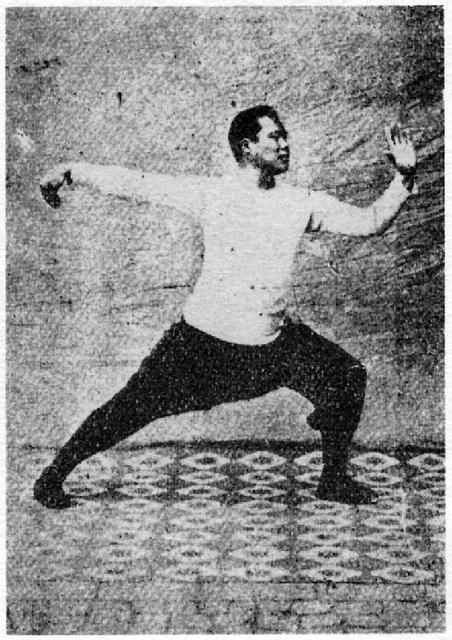
 Hidgi Chuan